
Suggested Books for Agile Data Professionals
This page lists agile data books, including books that support agile data concepts or techniques, that I believe you will find useful.
Agile Data Books: Agile Data Techniques
An Agile Data Guide to Information Product Canvas by Shane Gibson describes, as the title suggests, how to create and evolve information product canvases. An information product canvas is a specialized form of business model canvas. This book presents a collection of patterns that will help data teams to avoid the inherent challenges of traditional methods, enabling them to foster a shared understanding with stakeholders and thereby deliver products better aligned with their organizational objectives. It describes actionable methods to: Capture stakeholder needs and data requirements clearly and concisely; Empower data teams with everything they need to build great information products; Help stakeholders prioritize what’s important; Reduce rework and minimize back-and-forth between data teams and stakeholders; Ensure faster delivery of valuable information products; Become a “data to business translator” in your organization; and create trust within your stakeholders by consistently identifying what’s important. |
 Humanizing Data Strategy: Leading Data With the Head and the Heart by Tiankai Feng presents a refreshing take on turning advocates into active change-makers to create a sustainable data strategy. The book decodes the human aspects of data strategy into an actionable framework, linking human needs with business objectives through the five Cs: Competence, Collaboration, Communication, Creativity, and Conscience. This book presents a great take on agile data ways of thinking (WoT) and agile data leadership. Humanizing Data Strategy: Leading Data With the Head and the Heart by Tiankai Feng presents a refreshing take on turning advocates into active change-makers to create a sustainable data strategy. The book decodes the human aspects of data strategy into an actionable framework, linking human needs with business objectives through the five Cs: Competence, Collaboration, Communication, Creativity, and Conscience. This book presents a great take on agile data ways of thinking (WoT) and agile data leadership. |
Agile Data Books: Agile Database Techniques
 Refactoring Databases: Evolutionary Database Design describes, in detail, how to refactor a database schema to improve its design. The first section of the book overviews the fundamentals evolutionary database techniques in general and of database refactoring in detail. More importantly it presents strategies for implementing and deploying database refactorings, in the context of both “simple” single application databases and in “complex” multi-application databases. The second section, the majority of the book, is a database refactoring reference catalog. It describes over 60 database refactorings, presenting data models overviewing each refactoring and the code to implement it. This agile data book was written to describe database refactoring in detail. Refactoring Databases: Evolutionary Database Design describes, in detail, how to refactor a database schema to improve its design. The first section of the book overviews the fundamentals evolutionary database techniques in general and of database refactoring in detail. More importantly it presents strategies for implementing and deploying database refactorings, in the context of both “simple” single application databases and in “complex” multi-application databases. The second section, the majority of the book, is a database refactoring reference catalog. It describes over 60 database refactorings, presenting data models overviewing each refactoring and the code to implement it. This agile data book was written to describe database refactoring in detail. |
 Agile Database Techniques: Effective Strategies for the Agile Software Developer describes the philosophies and skills required for developers and database administrators to work together effectively on teams following evolutionary/agile software processes such as Scrum, Kanban, or SAFE. This was the first “Agile Data book”. Agile Database Techniques: Effective Strategies for the Agile Software Developer describes the philosophies and skills required for developers and database administrators to work together effectively on teams following evolutionary/agile software processes such as Scrum, Kanban, or SAFE. This was the first “Agile Data book”.
Note: Over the years the critical material from this book has been published, and evolved, here on the Agile Data site. As a result I do not recommend purchasing this book any more. |
 Refactoring SQL Applications provides a set of strategies for modifying the code in database applications to dramatically improve the way they work. Strategies include determining if and where you can expect performance gains; applying quick fixes such as limiting calls to the database in stored functions and procedures; refactor tasks, such as replacing application code by a stored procedure, or replacing iterative, procedural statements with sweeping SQL statements; refactor flow by increasing parallelism and switching business-inducted processing from synchronous to asynchronous; refactor database design using schema extensions, regular views, materialized views, partitioning, and more; and comparing before and after versions of a program to ensure you get the same results once you make modifications. This is a great agile data book for anyone with a programming background. |
 Test-Driven Database Development: Unlocking Agility shows how to adapt TDD to achieve the same powerful benefits in database design and development. The book first explains why TDD offers so much potential to database practitioners, and how to overcome obstacles such as the lack of conventional “testable classes.” You’ll learn how to use “classes of databases” to manage change more effectively; how to define testable database behaviors; how to maximize long-term maintainability by limiting a database’s current scope; and how to use “emergent design” to simplify future expansion. Building on this foundation, the book guides you through implementing modern TDD processes and database refactoring. He presents practical techniques for improving legacy databases; for deviating from strict TDD when necessary; and for adapting TDD to applications that persist data in file systems, XML, or serialized objects. This is a great agile data book for anyone with a programming background. |
Agile Data Books: DataOps
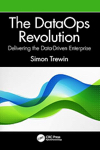 The DataOps Revolution: Delivering the Data-Driven Enterprise by Simon Trewin provides a good overview of DataOps. This book is a narrative about real world issues involved in using DataOps to make data-driven decisions in modern organisations. The book is built around real delivery examples based and lays out principles and a methodology for business success using DataOps. Presenting practical design patterns and DataOps approaches, it shows how DataOps projects are run and presents the benefits of using DataOps to implement data solutions. The DataOps Revolution: Delivering the Data-Driven Enterprise by Simon Trewin provides a good overview of DataOps. This book is a narrative about real world issues involved in using DataOps to make data-driven decisions in modern organisations. The book is built around real delivery examples based and lays out principles and a methodology for business success using DataOps. Presenting practical design patterns and DataOps approaches, it shows how DataOps projects are run and presents the benefits of using DataOps to implement data solutions. |
Agile Data Books: Agile Data Warehousing
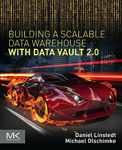
Building a Scalable Data Warehouse With Data Vault 2.0 covers everything one needs to know to create a scalable data warehouse end to end, including a presentation of the Data Vault modeling technique, which provides the foundations to create a technical data warehouse layer. The book discusses how to build the data warehouse incrementally using the agile Data Vault 2.0 methodology. In addition, readers will learn how to create the input layer (the stage layer) and the presentation layer (data mart) of the Data Vault 2.0 architecture including implementation best practices. |
 An Introduction to Agile Data Engineering Using Data Vault 2.0: Better Data Modeling by Kent Graziano begins with an overview of agile data engineering techniques. It goes through the basics for how to build a data warehouse model using the Data Vault 2.0 standards. It covers some details about the business data vault and then how to build a virtual information mart off your business vault using the DV2 architecture. An Introduction to Agile Data Engineering Using Data Vault 2.0: Better Data Modeling by Kent Graziano begins with an overview of agile data engineering techniques. It goes through the basics for how to build a data warehouse model using the Data Vault 2.0 standards. It covers some details about the business data vault and then how to build a virtual information mart off your business vault using the DV2 architecture. |
 Agile Analytics: A Value-Driven Approach to Business Intelligence and Data Warehousing is a ground-breaking book. Collier introduces platform-agnostic Agile solutions for integrating infrastructures consisting of diverse operational, legacy, and specialty systems that mix commercial and custom code. Using working examples, he shows how to manage analytics development teams with widely diverse skill sets and how to support enormous and fast-growing data volumes. Collier’s techniques offer optimal value whether your initiatives involve “back-end” data management, “front-end” business analysis, or both. Agile Analytics: A Value-Driven Approach to Business Intelligence and Data Warehousing is a ground-breaking book. Collier introduces platform-agnostic Agile solutions for integrating infrastructures consisting of diverse operational, legacy, and specialty systems that mix commercial and custom code. Using working examples, he shows how to manage analytics development teams with widely diverse skill sets and how to support enormous and fast-growing data volumes. Collier’s techniques offer optimal value whether your initiatives involve “back-end” data management, “front-end” business analysis, or both. |
Agile Data Warehousing Project Management describes an update to Ralph Hughes’ agile data warehousing strategy. This step-by-step implementation guide will prepare you to join or even lead a team in visualizing, building, and validating a single component to an enterprise data warehouse. The book provides a thorough grounding on the mechanics of Scrum as well as practical advice on keeping your team on track. It includes strategies for getting accurate and actionable requirements from a team’s business stakeholders. The book covers revolutionary estimating techniques that make forecasting labor far more understandable and accurate and demonstrates a blends of Agile methods to simplify team management and synchronize inputs across IT specialties. |

Extreme Scoping: An Agile Approach to Enterprise Data Warehousing and Business Intelligence is rich with advice and guidance for virtually every aspect of BI initiatives from planning and requirements to deployment and from back-end data management to front-end information and analytics services. This agile data book is filled with a lot of common sense and lessons learned through experience. |
 Agile Data Warehouse Design: Collaborative Dimensional Modeling from Whiteboard to Star Schemas is a step-by-step guide for capturing data warehousing/business intelligence (DW/BI) requirements and turning them into high performance dimensional models in the most direct way: by model storming with BI stakeholders. This agile data book describes BEAM*, an agile approach to dimensional modeling, for improving communication between data warehouse designers, BI stakeholders and the whole DW/BI development team. BEAM? provides tools and techniques that will encourage DW/BI designers and developers to move away from their keyboards and entity relationship based tools and model interactively with their colleagues. Agile Data Warehouse Design: Collaborative Dimensional Modeling from Whiteboard to Star Schemas is a step-by-step guide for capturing data warehousing/business intelligence (DW/BI) requirements and turning them into high performance dimensional models in the most direct way: by model storming with BI stakeholders. This agile data book describes BEAM*, an agile approach to dimensional modeling, for improving communication between data warehouse designers, BI stakeholders and the whole DW/BI development team. BEAM? provides tools and techniques that will encourage DW/BI designers and developers to move away from their keyboards and entity relationship based tools and model interactively with their colleagues. |
Agile Data: Data Governance
 Non-Invasive Data Governance by Robert S. Seiner provides a detailed look at effective data governance. Data-governance programs focus on authority and accountability for the management of data as a valued organizational asset. Data Governance should not be about command-and-control, yet at times could become invasive or threatening to the work, people and culture of an organization. Non-Invasive Data Governance™ focuses on formalizing existing accountability for the management of data and improving formal communications, protection, and quality efforts through effective stewarding of data resources. Non-Invasive Data Governance by Robert S. Seiner provides a detailed look at effective data governance. Data-governance programs focus on authority and accountability for the management of data as a valued organizational asset. Data Governance should not be about command-and-control, yet at times could become invasive or threatening to the work, people and culture of an organization. Non-Invasive Data Governance™ focuses on formalizing existing accountability for the management of data and improving formal communications, protection, and quality efforts through effective stewarding of data resources. |

Non-Invasive Data Governance Strikes Again: Gaining Experience and Perspective by Robert S. Seiner provides a blend of 50 applicable lessons learned and perspectives gained from years of assisting organizations worldwide to follow the popular non-invasive approach from the bestseller, Non-Invasive Data Governance. Non-Invasive Data Governance (NIDG) does not mean that the governance of data and information will be easy or without trials and tribulations. Non-invasive does not mean that the program will be low impact. NIDG focuses on leveraging existing levels of accountability while addressing opportunities to improve. |
 Non-Invasive Data Governance Unleashed: Empowering People to Govern Data and AI by Robert S. Seiner explains that data governance is not just a technical or procedural task but fundamentally about people and their data-related behavior. The book unleashes rich and practical guidance on how to implement NIDG in various organizational contexts. Whether dealing with limited resources, decentralized data management, or the need to prepare data for AI applications, you will will find actionable steps and real-world examples that make the implementation process straightforward and achievable. Non-Invasive Data Governance Unleashed: Empowering People to Govern Data and AI by Robert S. Seiner explains that data governance is not just a technical or procedural task but fundamentally about people and their data-related behavior. The book unleashes rich and practical guidance on how to implement NIDG in various organizational contexts. Whether dealing with limited resources, decentralized data management, or the need to prepare data for AI applications, you will will find actionable steps and real-world examples that make the implementation process straightforward and achievable. |
Recommended Reading
 This book, Choose Your WoW! A Disciplined Agile Approach to Optimizing Your Way of Working (WoW) – Second Edition, is an indispensable guide for agile coaches and practitioners. It overviews key aspects of the Disciplined Agile® (DA™) tool kit. Hundreds of organizations around the world have already benefited from DA, which is the only comprehensive tool kit available for guidance on building high-performance agile teams and optimizing your WoW. As a hybrid of the leading agile, lean, and traditional approaches, DA provides hundreds of strategies to help you make better decisions within your agile teams, balancing self-organization with the realities and constraints of your unique enterprise context. This book, Choose Your WoW! A Disciplined Agile Approach to Optimizing Your Way of Working (WoW) – Second Edition, is an indispensable guide for agile coaches and practitioners. It overviews key aspects of the Disciplined Agile® (DA™) tool kit. Hundreds of organizations around the world have already benefited from DA, which is the only comprehensive tool kit available for guidance on building high-performance agile teams and optimizing your WoW. As a hybrid of the leading agile, lean, and traditional approaches, DA provides hundreds of strategies to help you make better decisions within your agile teams, balancing self-organization with the realities and constraints of your unique enterprise context. |